

At a glance
1. Rohan Kesireddy from Singapore.
2. User requesting summarisation.
3. Assistant generating outputs.
1. Summarized Rohan Kesireddy biography.
2. Created speaker introduction text.
3. Produced structured 5W1H table.
1. During current session today.
2. After PDF upload.
3. Before publication workflow.
1. Conversation conducted online.
2. Content relevant to Singapore.
3. For use in WordPress site.
1. For WordPress post presentation.
2. To summarise conversation clearly.
3. To improve reader understanding.
1. Used PDF content extraction.
2. Applied newspaper‑style writing.
3. Followed formatting rules strictly.
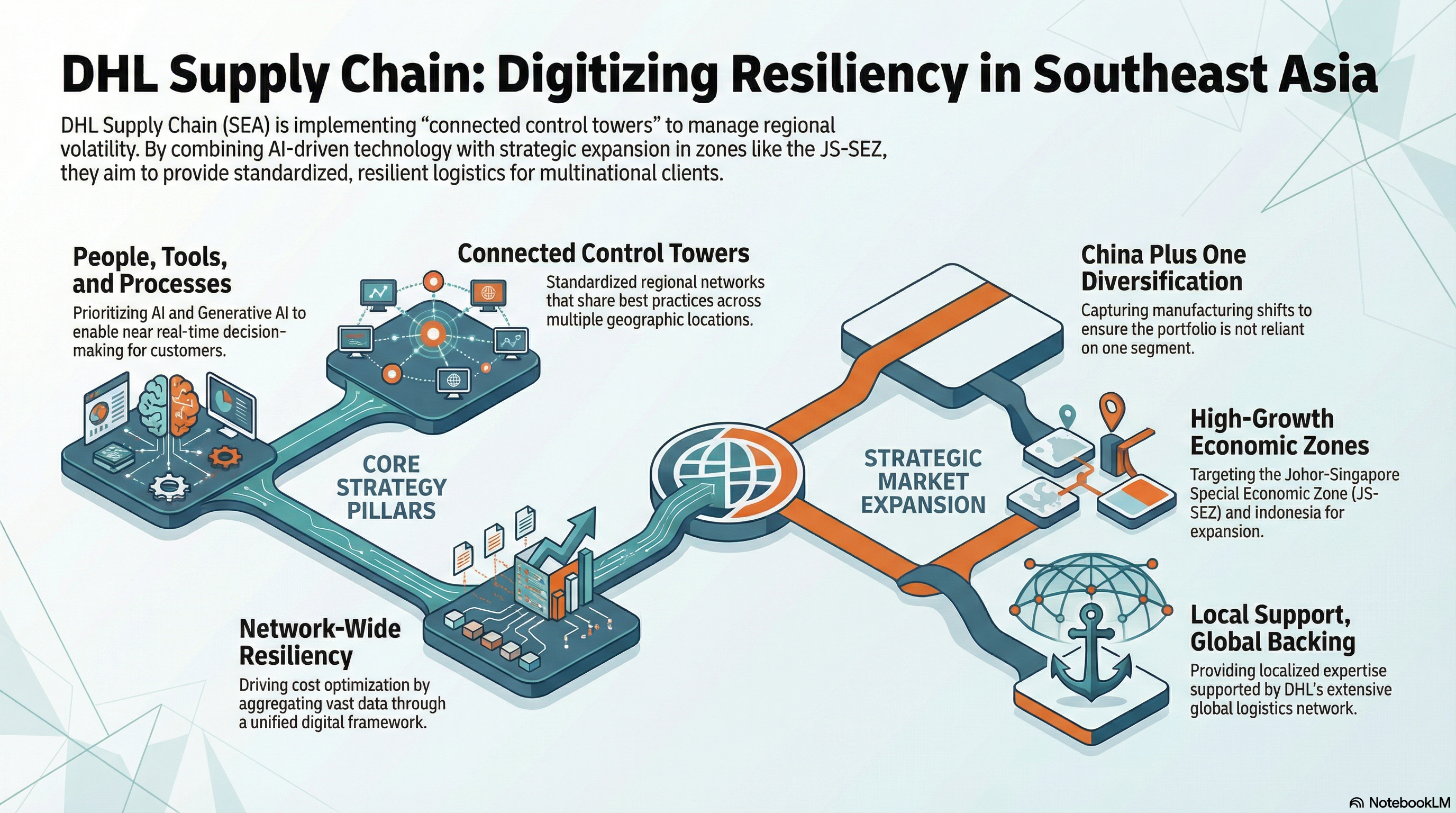
The logistics major is targeting growth in the Johor-Singapore Special Economic Zone (JS-SEZ) and Indonesia while leveraging the “China Plus One” strategy to diversify its customer base. This move addresses the critical industry pain point of managing volatility across multiple locations through standardized processes and real-time data.
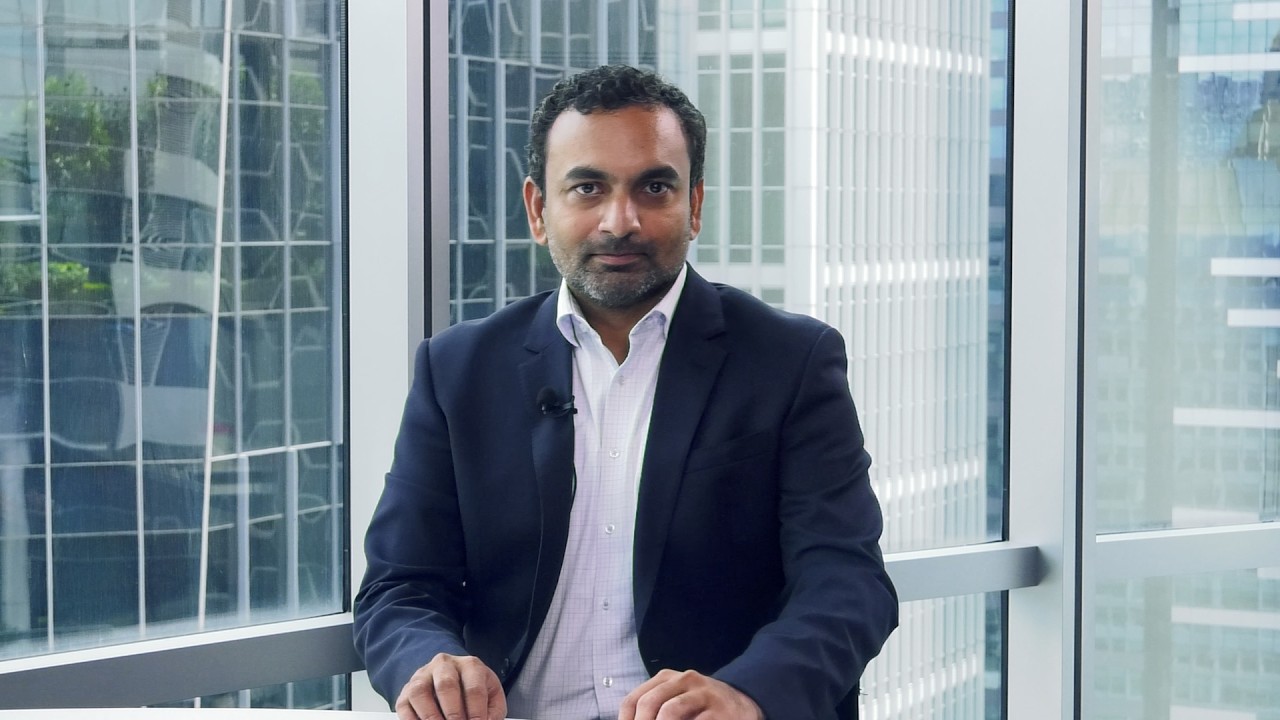
“The big thing at DHL Southeast Asia for us is to develop the connected control towers to enable our customers to grow, build resiliency into supply chains and also drive cost optimisation,” Rohan Kesireddy, Sr. Director, Business Development, DHL Supply Chain (SEA) told BackgroundBriefing.news.
Investment in AI and People
DHL is centering its strategy on three core pillars: people, tools, and processes. The firm is prioritizing investments in Artificial Intelligence (AI) and Generative AI to equip its workforce for a “future-ready” environment. By aggregating vast amounts of information through these technologies, the company aims to facilitate near real-time decision-making for its customers to improve supply chain resiliency.
Kesireddy noted that the company’s differentiation lies in its “connectedness through a network.” When operations are established in one country, best practices are shared across the regional cluster. This ensures that network customers, who operate in multiple locations, experience standardized service levels and a unified supply chain resiliency framework.
Strategic Market Expansion
Beyond operational efficiency, the business development team is tracking qualitative targets, including penetration into specific high-growth segments. Success is measured not just by deal pipelines but by the ability to capture shifts in manufacturing, particularly Chinese enterprises moving into Malaysia and Indonesia.
“We hear a lot about the Johor-Singapore Special Economic Zone and China Plus One… those are the ones where we have specific targets so that we are not purely reliant on one sect of customers,” Kesireddy said. By focusing on local conglomerates and “good drivers” in each market, the firm seeks to maintain a diversified portfolio while improving supply chain resiliency.
The deployment of these digital tools allows DHL to provide localized support with the backing of a global network, ultimately helping clients navigate complex regional trade dynamics to ensure long-term supply chain resiliency.
More stories: Container shipping targets US$48B debt capacity to fast-track logistics pivot, says Standard Chartered
Transcript of the interview:
The big thing at DHL Southeast Asia for us is to develop connected control towers to enable our customers to grow, build resiliency into supply chains, and drive cost optimization. This is what we are focusing on as part of our strategy and our Southeast Asia cluster growth enablers to drive customer retention and focus while working with local partners.
Let me explain a bit more about each of these points. We are trying to invest in three specific areas.
- People: We are putting a lot of attention on AI and generative AI to bring tools and technologies to develop and be future-ready.
- Data and technologies: We are leveraging these to bring information together so we can make decisions in near real-time and give that decision-making power to our customers.
- Process optimization and standardization: Most of our customers operate with us in multiple locations and expect us to drive standardization through process.
Now DHL obviously is just one of many players; what makes you special in this area?
What makes us special is the focus we are driving in our people because we are in a people business. We acknowledge how we give them the tools, training, and required skill sets they bring in and how they actually upskill.
At the same time, we focus on connectedness through a network. Whenever we have operations in one country, the countries share best practices so the experience is not new when a customer engages in a different country.
And obviously being in business development, I guess the success is obvious, right? Winning more customers. Presumably you also segment and differentiate; what does success look like for you?
Success purely looking at the numbers means getting the pipeline and closing the deals. At the same time, we also have qualitative targets.
This means being able to penetrate specific segments we want to get into. Lately, we hear a lot about the Johor Singapore special economic zone and the China plus one strategy.
Most Chinese enterprises are moving into Indonesia and Malaysia, and there is a lot of growth happening in local conglomerates. We have specific targets for these so we are not purely reliant on one set of customers.
We are also looking at who the good drivers are in each of these markets. That defines success for me and my team.
Sources & citations
- Johor-Singapore SEZ: What you need to know accessed 2026-06-23