

Overview:
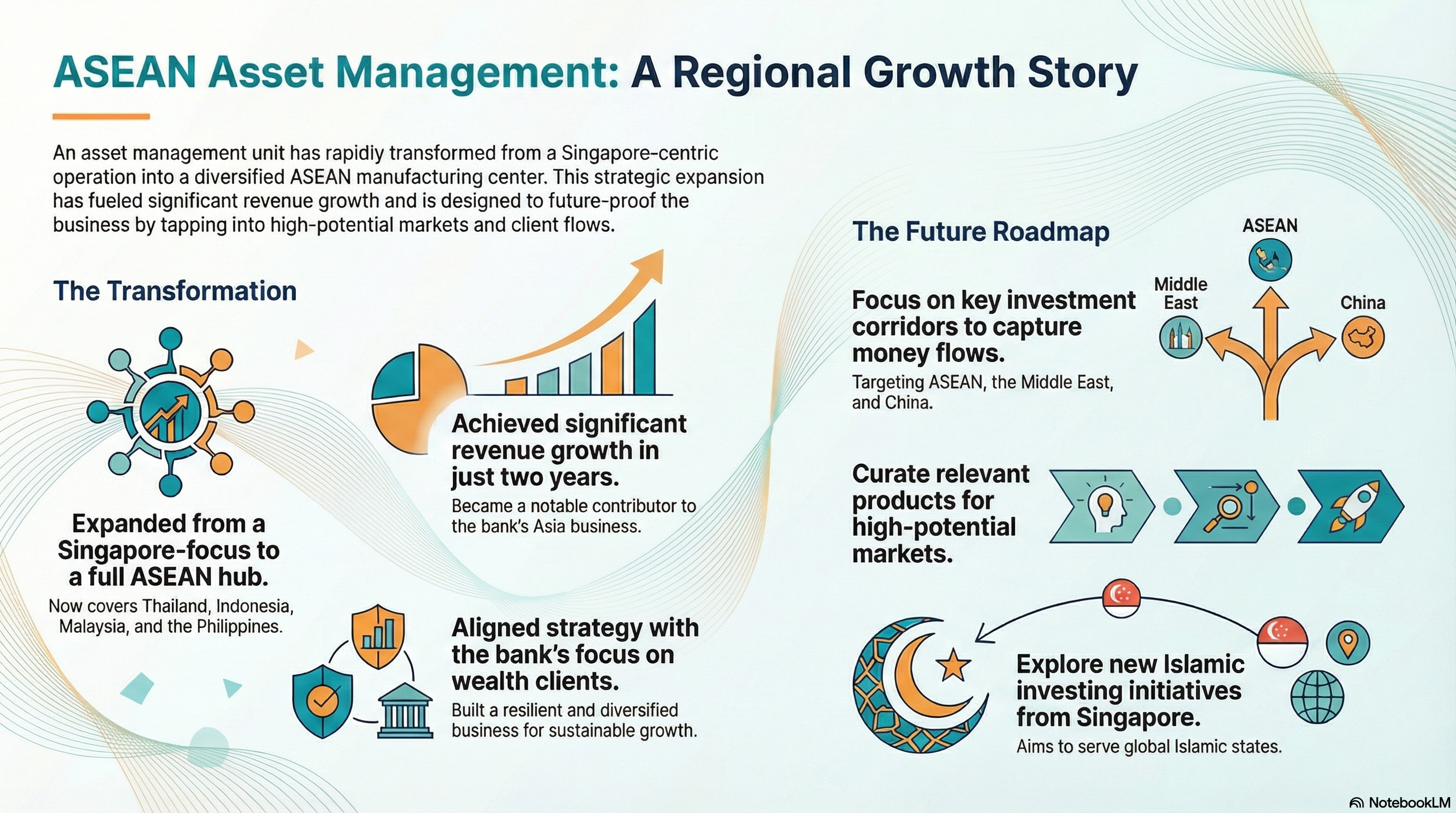
- Expanded regional presence from a Singapore-focused office to a full ASEAN manufacturing center covering Thailand, Indonesia, Malaysia, and the Philippines.
- Achieved significant revenue growth, making the unit a notable contributor to the Asia book of business.
- Aligned strategy with the bank’s wealth client focus, complementing its growth and aspirations.
- Futureproofed the business by building a resilient and diversified backbook across high-potential markets.
- Roadmap includes curating relevant products, leveraging corridors like ASEAN, Middle East, and China, and exploring Islamic investing initiatives.
The asset management unit of a leading bank has transformed from a Singapore-centric operation into a regional powerhouse, marking significant growth in revenue and market presence across Asia.
Regional Expansion and Revenue Surge
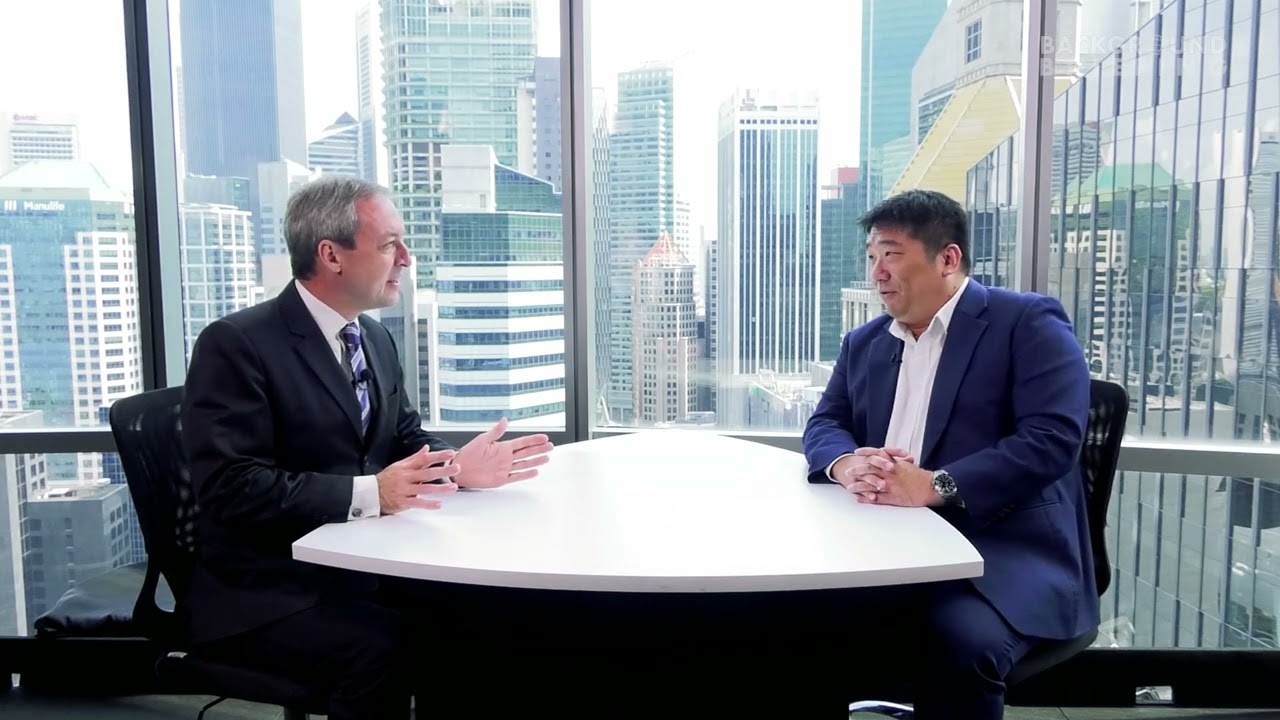
In just two years, the team has evolved into a full-fledged ASEAN manufacturing center operating out of Singapore and extending into Thailand, Indonesia, Malaysia, and the Philippines. “A year ago, we were probably in just Singapore and Malaysia,” noted Pang Qi Lim, Chief Executive Officer for Southeast Asia and Singapore at HSBC Asset Management.
This expansion has fueled a sharp rise in revenue, positioning the unit as a notable contributor to the bank’s Asia book of business. The growth reflects a deliberate strategy to align with the bank’s focus on serving wealthy clients and capturing flows across key corridors.
Strategic Alignment and Futureproofing
The roadmap began with a principle of futureproofing the business and building sustainability through diversification. “We’ve aligned ourselves to the bank and more importantly, we’re now thinking in terms of where the money is flowing and where we best place to catch them as well,” Lim added.
The strategy includes tapping into high-potential markets and creating a resilient backbook of business to ensure consistent growth year after year.
Next Steps: Corridors and Islamic Investing
Looking ahead, the unit plans to curate products relevant to emerging corridors such as ASEAN, the Middle East, and China. Singapore’s position as a financial hub also opens opportunities for Islamic investing initiatives, which could have implications across global Islamic states.
More stories: Financial sponsors demand faster onboarding, Standard Chartered responds
About the speaker:
Pang Qi Lim
Chief Executive Officer for Southeast Asia and Singapore at HSBC Asset Management
HSBC
Pang Qi Lim, Chief Executive Officer for Southeast Asia and Singapore at HSBC Asset Management, also serves as Head of Strategic Partnerships for the region. Based in Singapore, he leads the firm’s strategic growth ambitions across Southeast Asia, focusing on expanding the client base, strengthening partnerships, and driving sales and distribution strategies.
He brings over two decades of experience in asset management and banking, having previously held senior roles at Fidelity International, where he spearheaded business development and strategic initiatives across Asia Pacific. Earlier in his career, Pang Qi worked with Standard Chartered Bank and Fortis Private Bank, building expertise in wealth and investment solutions. [about.hsbc.com.sg]
FAQs:
What progress has been made in the region?
We have expanded from being a Singapore-focused office to becoming a full Azan manufacturing center, covering markets like Thailand, Indonesia, Malaysia, and the Philippines.How has revenue growth changed over the past two years?
Revenue has grown significantly, and we are now a notable contributor to the Asia book of business compared to previous years.What role does the asset management unit play in the bank’s strategy?
We complement the bank’s growth by aligning with its focus on wealthy clients and building strategies that support their aspirations.What was the starting principle for building this presence?
We began with the principle of futureproofing the business, ensuring sustainable growth through resilience and diversification.How did you diversify the business?
By adding high-potential markets and creating a diversified backbook, we ensured consistent growth regardless of market fluctuations.What are the key corridors you are focusing on?
We are focusing on the Azan corridor, the Middle Eastern corridor, and the Chinese corridor to capture money flows effectively.What is the roadmap for the next two years?
Our roadmap includes curating relevant products, strengthening corridor strategies, and exploring Islamic investing initiatives.Why is Singapore important for future initiatives?
Singapore serves as a convenient hub for launching initiatives like Islamic investing, which have global implications for Islamic states.How do you plan to stay relevant in the market?
By curating products that align with client needs and leveraging strategic corridors to meet evolving wealth aspirations.What does futureproofing mean for your business?
It means building a resilient, diversified portfolio that ensures sustainable growth and adaptability to market changes.5W1H summary:
| What |
1. Expanded Azan manufacturing center footprint. 2. Significant revenue growth in Asia book. 3. Strategy aligned to wealth clients. |
|---|---|
| How |
1. Futureproofed through resilient diversification. 2. Added high-potential ASEAN markets. 3. Curated corridor-relevant products. |
| Why |
1. Capture regional money flows. 2. Complement bank’s growth priorities. 3. Ensure sustainable year-on-year growth. |
| Who |
1. Asset management unit leadership. 2. Bank serving wealthy clients. 3. External clients across ASEAN. |
| Where |
1. Singapore hub, ASEAN expansion. 2. Malaysia, Thailand, Indonesia, Philippines. 3. Middle East and China corridors. |
| When |
1. Two-year transformation to date. 2. Major footprint growth last year. 3. Next two-year roadmap planned. |