

Overview:
- IBFSG is actively unlocking career pathways for polytechnic graduates in the financial sector.
- Polytechnic graduates are proving they can match university peers in career progression and leadership roles.
- Structured traineeships and internships are doubling, offering 300 new opportunities across top financial institutions.
- Flexible work-study pathways are being developed with universities and a pioneering bank to accelerate learning.
- IBFSG’s strategy focuses on partnering, exposing talent to industry, and creating recognised career pathways.
Polytechnic Talent: A Rising Force in Finance
Financial institutions in Singapore are increasingly recognising the potential of polytechnic graduates, a group previously underrepresented in the sector. The Institute of Banking & Finance Singapore (IBFSG) is leading efforts to reshape perceptions and create tangible career opportunities for these young professionals.
Success Stories Breaking the Degree Barrier
Maggie, a Singapore Polytechnic alumna, exemplifies this shift. After a traineeship at JP Morgan, she rose through the ranks to become vice president—an achievement IBF CEO Carolyn Neo equates to the trajectory of a university graduate.
IBFSG’s Three-Pronged Strategy
To scale such success, IBFSG is implementing three key actions:
- Partnering with 10 major financial institutions to build dedicated pipelines.
- Exposing talent to real-world experience through 300 internships and traineeships—nearly doubling current opportunities.
- Creating Pathways via flexible work-study programs with universities and a pioneering bank, recognising accredited workplace training to fast-track learning.
Building Job-Ready Talent
These initiatives aim to equip polytechnic graduates with hands-on experience and in-demand skills, enhancing their employability and career progression in the financial sector.
More stories: NIEC launches three-tier framework to boost early childhood leadership
About the speaker:
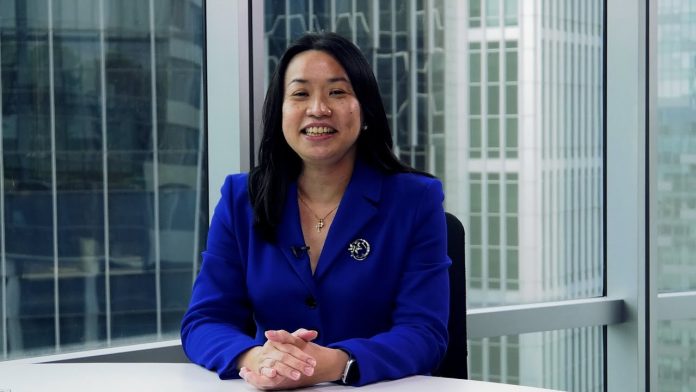
Carolyn Neo
Chief Executive Officer
The Institute of Banking & Finance Singapore
Carolyn Neo leads The Institute of Banking & Finance Singapore as Chief Executive Officer, a role she assumed in January 2024, following a four-month period as CEO-designate. Prior to her current position, Neo dedicated nearly six years to the Monetary Authority of Singapore (MAS), serving as Chief Representative of the MAS London Office for over four years. Her extensive background also includes an executive director role at MAS focusing on Financial Centre Development and a decade as Regional Director Europe for Enterprise Singapore.
5W1H summary
| Category | Answer Points |
| Who | 1. IBF convenes efforts. |
| 2. Polytechnic talent identified. | |
| 3. Institutions, universities partners. | |
| What | 1. Enhance career pathways. |
| 2. Offer 300 opportunities. | |
| 3. Create flexible study. | |
| When | 1. Current efforts ongoing. |
| 2. Vision 5-10 years. | |
| 3. Continuous learning focus. | |
| Where | 1. Singapore financial sector. |
| 2. Aim for top talent hub. | |
| Why | 1. Untapped talent pool. |
| 2. Enhance job readiness. | |
| 3. Build skilled workforce. | |
| How | 1. Partnering with employers. |
| 2. Exposing to internships. | |
| 3. Creating flexible pathways. |
Frequently Asked Questions
1. What is the IBF’s key objective regarding polytechnic talent? The IBF’s key objective is to enhance career pathways for polytechnic talent in the financial sector, as this group is currently a relatively untapped talent pool for the sector.
2. What are the three key actions IBF is taking to achieve its objectives? The IBF is taking three key actions: firstly, partnering with employers; secondly, exposing polytechnic talent to opportunities; and thirdly, creating pathways for career progression.
3. How many internship and traineeship opportunities is IBF offering through its partnerships? IBF is offering 300 internship and traineeship opportunities through 10 partnering financial institutions, which almost doubles the existing opportunities in the sector.
4. How is IBF addressing the challenge of balancing work and study for young professionals? IBF is addressing this by working with three universities and one pioneering bank to look at flexible and practical work-study pathways, including accelerating learning by recognising accredited workplace training offered by financial institutions.
5. What is IBF’s long-term vision for Singapore’s financial sector workforce? IBF envisions building a skilled and resilient workforce for the financial sector in Singapore, embracing emerging trends like sustainable finance and GenAI, to make Singapore a top talent hub. Their vision also includes a full suite of talent, from job-ready young professionals to mid-career and leadership talent.
Transcript of the Conversation:
It was great and I would say that our key objective is to enhance the career pathways for polytechnic talent in the financial sector. Currently, polytechnic talent is a relatively untapped talent pool for the sector. Polytechnic talent may feel that their career prospects may not be good because they do not have a university degree, but that’s not true. There are many real-life examples. For instance, Maggie, who graduated from Singapore Poly with a banking and finance diploma, she has taken a traineeship opportunity at JP Morgan and after 12 months of structured learning, she was hired at JP Morgan and recently she has been promoted to vice president. So her career progression is equivalent to a university graduate. The question is how do we enable more poly talent to have such career opportunities in the sector. So IBF is taking three key actions. Firstly, partner. Secondly, expose. And thirdly, create pathways. Let me touch on three of them briefly. Firstly, partner. We are partnering 10 of the largest financial institution employers to develop opportunities and pipelines of poly talent in the sector.
Secondly, we are looking at expose. We are exposing this poly talent to internship and traineeship opportunities and we are offering 300 of such opportunities through the 10 financial institutions that we are partnering. This is almost doubling the existing opportunities in the sector right now and we would like them to build up hands-on experience and in-demand skills so that they could enhance their job readiness and that enhance the quality of the supply of the talent and make them more attractive to their employers. And thirdly, we are looking at creating pathways. So we are working with three universities and one pioneering bank to look at work-study pathways for those young professionals who want to study further in universities while continuing to work in the financial institutions. We do note that in reality it’s hard to balance work and study at the same time. So IBF is addressing this by looking at pathways for work and study which are more flexible and practical for them. And one such option that we are looking at is how to accelerate the learning pathway and the duration of such course by recognizing the workplace training offered by the financial institutions, especially those accredited by IBF, so that we can look at a faster learning pathway for them to work in the financial institutions.
Now what does IBF have to mobilize or what have you done in order to facilitate this partnership exposure creatively?
IBF is the convenor. So we look at the demand side. As I said, the first one is really to look at partnering. So we catalyze the demand by bringing together the 10 largest employers in the market to really look at how we can create such opportunities. Secondly, we actually look at the supply side, getting the poly talent ready for the job. So we actually look at exposing them to internship traineeship. So that enhances their job readiness. And thirdly, we actually look at pathways. We actually create the pathways which accelerate their learning pathways. So when we look at partnering, exposing and creating pathways, all this together match the demand and supply side and really create that skills-based hiring at the financial sector level, which what it means is that it will not focus on the academic qualification but really look at the skill sets that you have and that allows that skills is hiring and also the creation of the pipeline of talent, young talent with diverse background in the financial sector.
As CEO, obviously you have a vision for your organization. Where would you like to be in five or 10 years from now?
For IBF, I think we are in a very unique position to build a skilled and resilient workforce for the financial sector in Singapore. So we are looking at embracing emerging trends and two key drivers are sustainable finance and GenAI. So we are looking at how we can upskill and reskill workforce to navigate these trends and really be able to not only stay relevant but embrace the opportunities and manage the risk of such trends. Singapore will be one of the top talent hubs that you can spot and engage the workforce to achieve your business productivity growth or revenue generation. And the other aspect that we want to look at is really a whole suite of talent pool from young talent to mid-career to leadership talent. So for the young talent, as I mentioned, we want to have a job-ready pool of young talent who are well exposed to the sector even before they finish their studies and by the time they get into the sector, they are job ready and they are well exposed to earlier training opportunities. And for mid-career is really about continuous learning through their whole career lifespan. So we are looking at how they embrace emerging trends on the go and how they can continuously upskill and reskill to really raise their value add at their jobs. And even for the leaders, we are hoping to have a local pool of Singaporeans who can hold leadership positions in the global financial institutions and creating impact and enhancing Singapore as a vibrant and progressive financial center.