

At a glance
1. DBS Bank and automotive industry clients.
2. Global OEMs tier suppliers Singapore region.
1. DBS strengthens automotive supply chain resilience.
2. Supports decarbonisation goals for automakers.
1. Ongoing amid current global supply disruptions.
2. Targets 2030 and 2050 emissions milestones.
1. Singapore-based DBS with global automotive markets.
2. Across ASEAN and international supply chains.
1. Provides financing and supply chain visibility.
2. Connects OEMs with tier suppliers globally.
3. Leverages industry expertise and data insights.
DBS is ramping up efforts to strengthen automotive supply chain resilience as global carmakers grapple with persistent disruptions that threaten production schedules and brand reputation.
The bank, which works with original equipment manufacturers (OEMs) and multi-tier suppliers, is positioning itself as a financial and strategic partner to help companies navigate increasingly complex supply chains. Its approach combines financing, connectivity across markets and sector expertise.
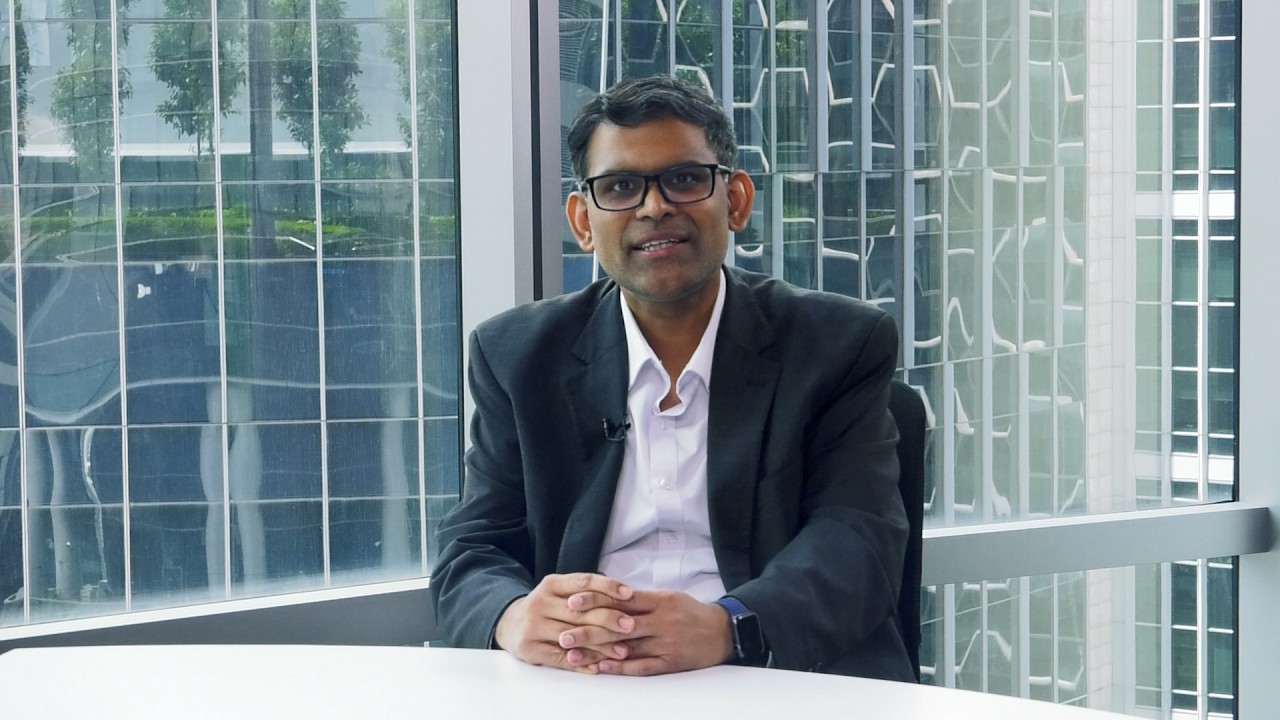
Global Head – Automotive Coverage,
DBS Bank
“Imagine you are the CEO of the world’s largest automaker with a solid order book… if one or two [components] are missing, it stops you from producing the whole car,” Karthik Kannan, Global Head of Automotive Coverage, DBS Bank told BackgroundBriefing.news. “We focus on understanding the deep tiers of the automotive supply chain… to ensure disruptions do not happen.”
The push comes as the automotive sector continues to face supply shocks, from semiconductor shortages to logistics bottlenecks, which have underscored the need for automotive supply chain resilience. Even minor disruptions can halt production lines, affecting delivery timelines and eroding customer trust built over decades.
Kannan said it works across the value chain, from global OEMs to tier-one and tier-two suppliers, offering solutions designed to improve visibility and coordination. The bank’s geographic reach allows it to map supply dependencies and identify potential weak points early.
“Through our presence across various markets, we understand the entire supply chain from global OEMs to tier one and tier two suppliers,” Kannan said. “This is what differentiates us from other banks.”
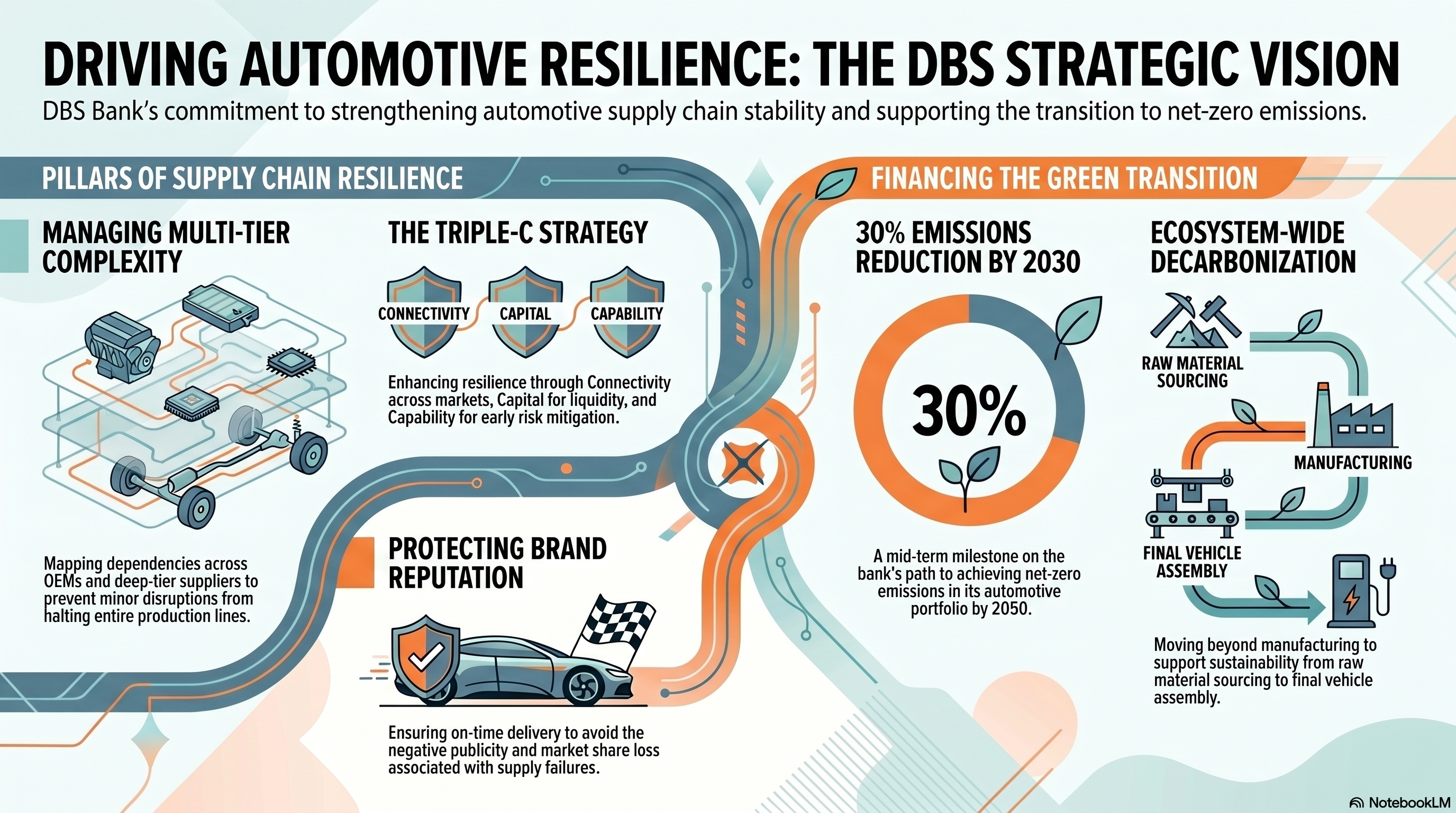
How DBS is addressing supply chain fragility
The bank’s strategy focuses on three areas: connectivity, capital and capability. Together, these aim to enhance automotive supply chain resilience by ensuring liquidity flows smoothly across suppliers and that disruptions can be identified and mitigated early.
This capability has become critical as automotive manufacturing grows more globalised, with production increasingly dependent on tightly coordinated networks of suppliers.
A fully integrated supply chain also reduces the risk of reputational damage for automakers. Failure to deliver vehicles on time can quickly translate into negative publicity and potential loss of market share.
Financing the shift to cleaner mobility
Beyond automotive supply chain resilience, DBS is also aligning its strategy with the industry’s transition to lower-carbon operations.
Automotive clients are increasingly seeking financial partners who can support their decarbonisation goals alongside operational stability. DBS has committed to achieving net zero emissions by 2050 for its automotive portfolio and aims to reduce emissions by 30 per cent by 2030.
“Customers want us to go beyond the supply chain to support the decarbonisation pathway,” Kannan said. “We do this by working with our customers, especially focused on the supply chain.”
The emphasis on supply chains reflects the growing recognition that emissions reductions cannot be achieved solely at the manufacturing level. Instead, decarbonisation efforts must extend across the entire ecosystem, from raw materials to final assembly.
As global automakers accelerate electrification and sustainability initiatives, the ability to combine financing with operational insights is emerging as a key differentiator. For DBS, strengthening automotive supply chain resilience while supporting decarbonisation may define its role in the sector’s next phase of transformation.
More stories: US$5b investment in Indonesia’s renewables supply chain to power Singapore, says Gurin Energy
Transcript of the interview:
We support global automotive customers across the value chain and focus on solving key industry issues like supply chain disruption. We do this through three Cs: connectivity, capital, and capability.
Imagine you are the CEO of the world’s largest automaker with a solid order book and a long queue of customers waiting for cars. There are about a thousand components that go into production, but if one or two are missing, it stops you from producing the whole car.
This translates into an inability to meet customer demand and generates negative publicity that affects a brand reputation built over a century. From our perspective, we focus on understanding the deep tiers of the automotive supply chain.
We provide solutions that go all the way to the multi-tier OEM to ensure disruptions do not happen. This allows the OEM to maintain a resilient supply chain to support the automotive sector.
What do you have at DBS that sets you apart from the competition? What gives you the inside run?
I think we have solid domain knowledge of the industry. We are one of the few banks to have focused coverage of the global automotive sector.
- Domain knowledge: We possess a deep understanding of the industry through focused global coverage.
- Connectivity: Through our presence across various markets, we understand the entire supply chain from global OEMs to tier one and tier two suppliers.
This is what differentiates us from other banks.
Ultimately, what sort of outcomes are your customers looking for that you are able to deliver?
I think there are two things.
- Resilient supply chain: We deliver a resilient supply chain so they do not face shortages that can impact them from a reputation standpoint.
- Decarbonization: Customers want us to go beyond the supply chain to support the decarbonization pathway.
As a bank, we are one of the few to commit to net zero emissions by 2050 for the automotive sector. By 2030, we have committed to reducing carbon emissions by 30 percent.
We do this by working with our customers to support their decarbonization pathway. This is especially focused on the supply chain.