
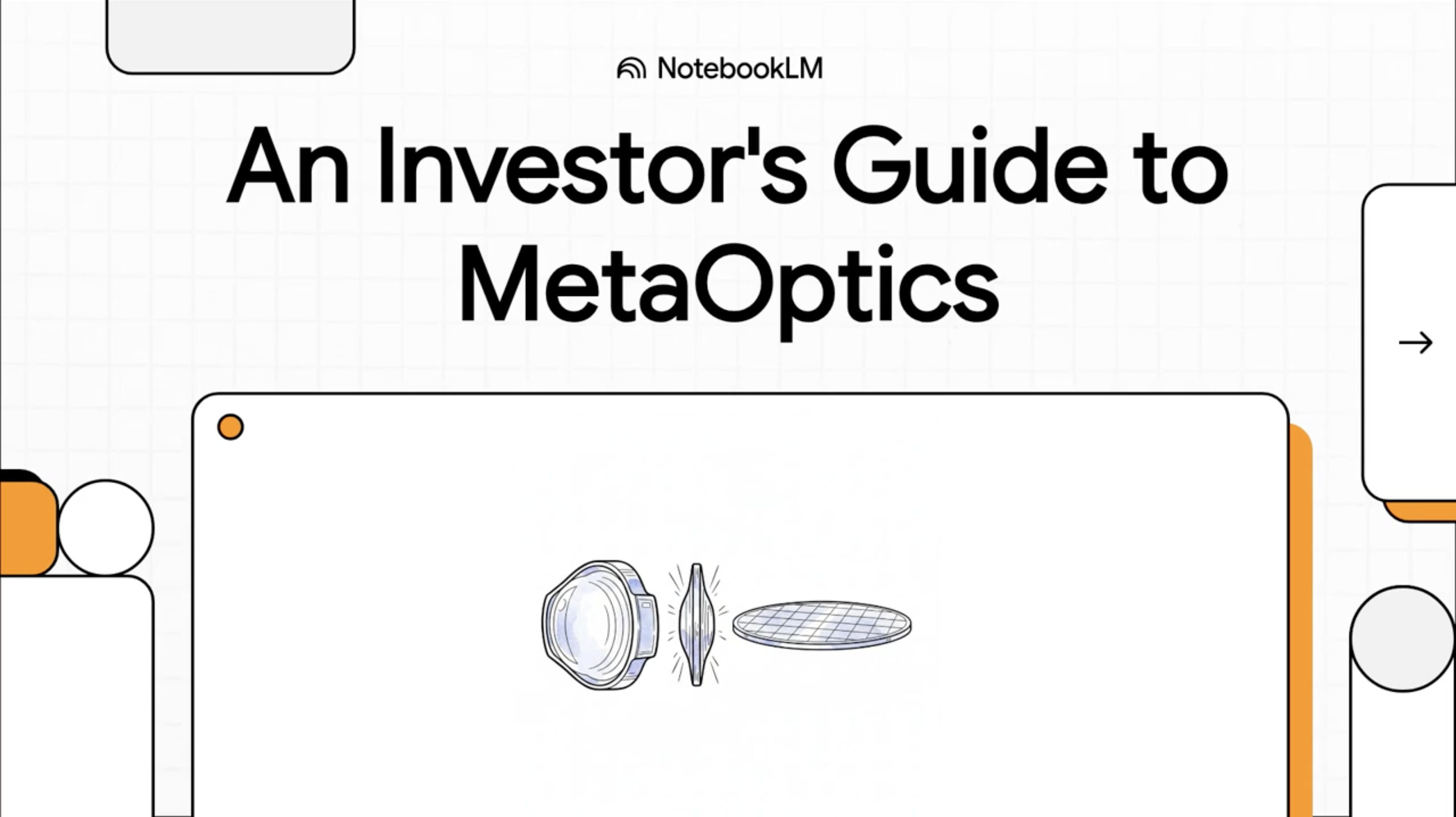
 headsets remains the primary hurdle for widespread adoption. The culprit is traditional optics: curved lenses that require physical depth and air gaps to bend light effectively.)
The End of Bulky Lenses
If you have looked at the back of a modern smartphone lately, you have likely noticed the “camera bump”—a necessary, if unsightly, protrusion required to house layers of curved glass. Similarly, the bulkiness of today’s virtual reality headsets remains the primary hurdle for widespread adoption. The culprit is traditional optics: curved lenses that require physical depth and air gaps to bend light effectively.
A radical solution is emerging in the form of “metalenses.” These are flat, ultra-thin structures that use nanoscale engineering to perform the work of heavy, curved glass. Leading this charge is MetaOptics Technologies, a Singapore-grown success story that recently made the high-stakes leap from research laboratory to a listed commercial player on the SGX Catalist board. Their trajectory is nothing short of explosive; in just one year, the company achieved an 891% revenue growth. While its roots are firmly in Singapore’s tech ecosystem, MetaOptics is already establishing a visionary “Silicon Valley presence” through its participation in Stanford Engineering’s SystemX Alliance, positioning itself to dominate the future of vision.
The Death of the Curved Lens
The shift from traditional optics to metasurface engineering represents a fundamental pivot in physics. Traditional lenses rely on the thickness and precise curvature of glass to refract light. In contrast, metalenses use “metasurfaces”—arrays of pillars or structures so small they are measured in billionths of a meter—to manipulate light on a perfectly flat plane.
This simplification of the “lens stack” allows optical systems to become orders of magnitude thinner and lighter. By replacing a complex stack of multiple curved elements with a single flat surface, the design language of everyday objects is poised to change forever. We aren’t just talking about the end of the camera bump; we are looking at a world where augmented reality glasses finally look like standard eyewear rather than tactical goggles.
“Optical metalenses represent a shift from traditional bulky optics to flat, ultrathin lenses enabled by metasurface engineering.”
From Lab Prototypes to Real World Sales
The era of metalenses is no longer a “future” concept; it is a present reality. In 2025, MetaOptics saw its revenue climb from nearly zero to S$787,388. Crucially, approximately 69% of that total was driven by a single milestone: the first commercial sale of its direct laser writer to a major semiconductor partner in Taiwan.
To understand this, think of the direct laser writer as the “bespoke tailor” of the optical world. It is a tool designed for high-customization and low-volume prototyping, allowing partners to design specific, unique lenses. This sale provides essential “technology validation,” proving that the equipment required to build this future is already being integrated into the global semiconductor supply chain.
Seeing in Color Sets the Leaders Apart
While the metalens market is heating up, a clear divide has formed in the competitive landscape. Current global leaders like Metalenz (USA) and NIL Technology (Denmark) have largely focused on infrared sensing—the invisible light used for features like Face ID.
MetaOptics is carving out a high-stakes monopoly in the visible light (color) spectrum. By using glass substrates instead of the silicon-based solutions common in infrared, they are targeting the mass-market applications of consumer cameras. While infrared is a specialized niche, color imaging is the bedrock of the digital world, from the phone in your pocket to the sensors in an autonomous vehicle.
The 12-Inch Secret to Mass Production
Scalability is the graveyard of many “deep-tech” startups, but MetaOptics has a manufacturing ace up its sleeve. While the direct laser writer serves as the bespoke tailor, the company’s use of “12-inch deep ultraviolet immersion photolithography” acts as its industrial factory.
Deep ultraviolet immersion is a high-tech printing process borrowed from the world of semiconductor chips, allowing for the mass production of nanostructures as small as 60 nanometers. This capability has elevated MetaOptics to a prestigious rank: it is currently third globally among companies with actual mass production capabilities and commercial shipments.
This “vertically-integrated” model—owning the machines, the process, and the product—creates immense “customer stickiness.” Furthermore, this growth is being bolstered by “silicon sovereignty” movements; the company is set to benefit from Singapore’s upcoming S$500 million national semiconductor fabrication facility, scheduled to be operational by 2027.
A Massive Market with 99 Percent Room to Grow
The opportunity for flat optics is massive, yet we are still on the ground floor. The global market is projected to grow at a 75% compound annual growth rate to reach US$493 million by 2029.
The most compelling data point for investors and tech enthusiasts alike is the penetration rate. In 2024, metalenses accounted for a mere 0.7% of the consumer electronics market. That figure is expected to climb to 4.1% by 2029, suggesting a massive runway for growth. As the technology matures, the total addressable market is estimated to skyrocket to a staggering US$27.2 billion.
The Road Ahead for Flat Optics
MetaOptics is now moving at terminal velocity. The company has secured a “seal of approval” from the giants of the mobile world through its integration into the Qualcomm platform and participation in the Qualcomm AI Program for Innovators. At the most recent Consumer Electronics Show, the company unveiled its “Gen-2” products, including AI smart glasses and 5G smartphone camera modules.
As is typical with early-stage deep-tech, the road is not without risk. MetaOptics remains loss-making as it pours capital into R&D and navigates long customer qualification cycles. However, the transition from lab-bound curiosity to global shipping contender suggests that the lens of the future has arrived.
If the lens in your smartphone or your next pair of glasses became as thin as a human hair, how else might that invisible technology change the way you interact with the digital world?
Related stories: Will Singtel’s Rally Continue Or Slowdown In 2026?