
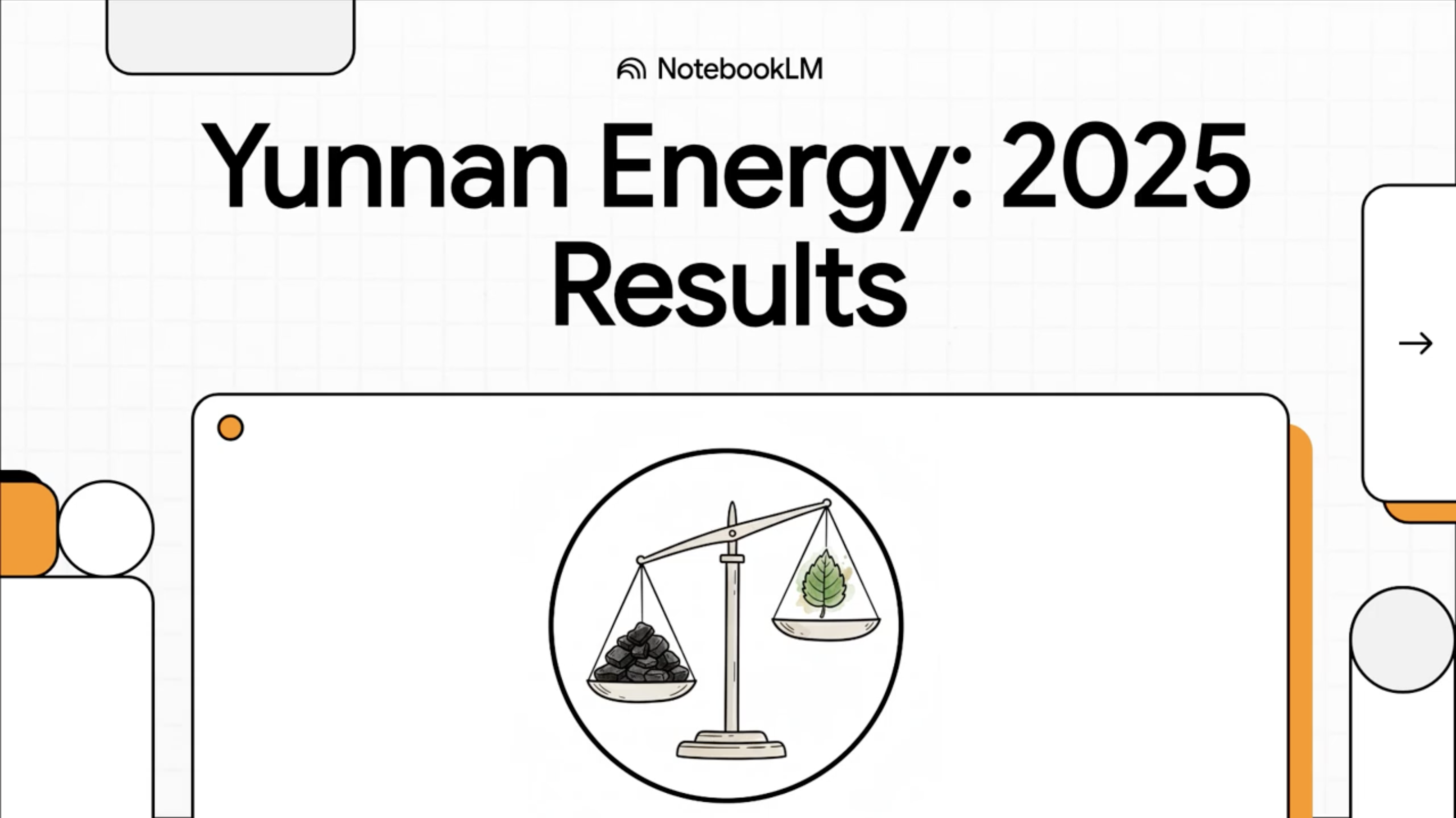

Yunnan Energy’s Strategic Retreat to Higher Ground
In corporate strategy, as in viticulture, the most aggressive pruning often precedes the most robust harvest. For Yunnan Energy International, the 2025 fiscal year was a masterclass in the “strategic retreat.” To the untrained eye, the headline figures suggest a company in contraction: a 31.9% collapse in revenue and a slide from a modest HK491,000 profit in 2024 to a net loss of HK898,000 in 2025. Yet, beneath the red ink lies a deliberate, surgical effort to excise low-margin bulk trading and pivot toward a high-value future in green energy and medical technology.
This loss was not merely a byproduct of market headwinds but a calculated cost of transition. The bottom line was pressured by a sharp 88.1% spike in selling and distribution expenses—driven primarily by increased freight costs for coal—and a rise in income tax obligations. For a company under state-owned parentage (Yunnan Provincial Energy Investment Group), these short-term fiscal bruises are the necessary friction of an industrial pivot that prioritizes long-term resilience over superficial volume.
The Efficiency Paradox: Quality Over Quantity
The 2025 results present a striking efficiency paradox: while total revenue withered from HK576.6 million to HK392.7 million, the Group’s gross profit margin actually expanded from 5.2% to 6.3%. This margin expansion is the “smoking gun” of a successful quality-over-quantity strategy.
By jettisoning the deadweight of low-margin bulk trading—specifically reducing exposure to volatile electrolytic copper and agricultural commodities like panax notoginseng—the Group has demonstrated a new disciplinary rigor. Management’s “tightened risk assessment” led to the intentional selection of higher-margin contracts within the coal and new materials sectors. This shift indicates that Yunnan Energy is no longer chasing top-line vanity but is instead focusing on the “bottom-line sanity” of high-quality, defensible trade flows.
The Green Energy Anchor: Validating Capital Allocation
The centerpiece of this transformation is the Group’s deepening stake in Dayao Green Energy. Representing 12.1% of the company’s total assets, the 6.67% equity interest in the 300MW/600MWh energy storage project reached a fair value of HK$54.4 million by year-end. This is not a passive holding; it is a strategic anchor.
For the first time, the Group’s capital allocation strategy was validated by a tangible return: a maiden dividend and an unrealized fair value gain of HK$2.16 million. Unlike the transient nature of commodity trading, this project offers structural revenue streams derived from “capacity leasing services and electricity sales.” As management noted:
“In recent years, the global energy structure has accelerated its transition to green and low-carbon energy, leading to a sustained increase in demand for clean energy in Southeast Asia. Leveraging the resource advantages of its controlling shareholder… the Group is actively advancing preliminary research and negotiations for relevant energy projects.”
A Med-Tech Breakthrough in the Southwest
Perhaps the most surprising success of 2025 was the Distribution Business’s breakthrough into the high-end medical sector. By aligning with the Chinese national policy of subsidizing the replacement of old equipment with new technology, Yunnan Energy successfully penetrated the institutional market of tertiary hospitals in Yunnan and Guizhou provinces.
The Group secured public bidding projects totaling approximately RMB10 million, transitioning from a simple middleman to a sophisticated provider of complex systems, including MRI machines, microbial mass spectrometers, and anesthesia equipment. By targeting top-tier institutional clients, the company is insulating itself from the volatility of consumer markets and securing a foothold in a sector characterized by high barriers to entry and steady, policy-backed demand.
Governance and the Silicon Supply Chain
Looking ahead, the Group has moved to secure its upstream supply chain through a significant “continuing connected transaction.” In January 2026, the company entered into a Master Purchase Agreement with its related party, Yunnan Energy Green New Materials, to secure organic and industrial silicon materials.
Ratified by shareholders in February 2026, this agreement carries an annual cap of HK$172 million. In the world of business journalism, such connected transactions are often viewed with a critical eye; however, in this context, it represents a strategic move to mitigate the supply disruptions and market volatility inherent in the photovoltaic sector. It secures the materials necessary for the Group’s green energy ambitions while leveraging the scale of its parent organization.
The RCEP Factor: A Regional Play
The Group’s ambitions are no longer confined by the PRC border. Capitalizing on the Regional Comprehensive Economic Partnership (RCEP) and the “Belt and Road” initiative, Yunnan Energy is utilizing 12 overseas representative offices to clear logistics bottlenecks in Southeast Asia.
With a specific focus on Laos, Vietnam, and Singapore, the Group is building a three-pronged regional channel:
- Domestic Centralized Procurement: Aggregating resources within China.
- Cross-Border Transportation: Optimizing the logistics of the energy supply chain.
- Overseas Distribution: Establishing nodes for regional delivery.
Conclusion: The Long Game
Yunnan Energy International is a company in the midst of a total industrial metamorphosis. While the 85.6% gearing ratio remains high, a discerning financial analyst will note that this is a marked improvement from the 93.7% leverage seen in 2024—a downward trend that signals a gradual stabilization of the balance sheet.
The transition from a volume-heavy commodity trader to a specialized energy and medical technology player is rarely a linear path to profit. The 2025 net loss is the price of admission for this total pivot. As the Group “clears the bottlenecks” and aligns its destiny with regional green energy demand, the question for the market is no longer about the size of the revenue, but the durability of the margin. Is the short-term pain of a strategic retreat the necessary precursor to a higher-ground victory? In 2025, Yunnan Energy placed a significant bet that the answer is yes.
Related stories: How Koh Brothers Engineered An $18.6 Million Turnaround In FY2025