

Overview:
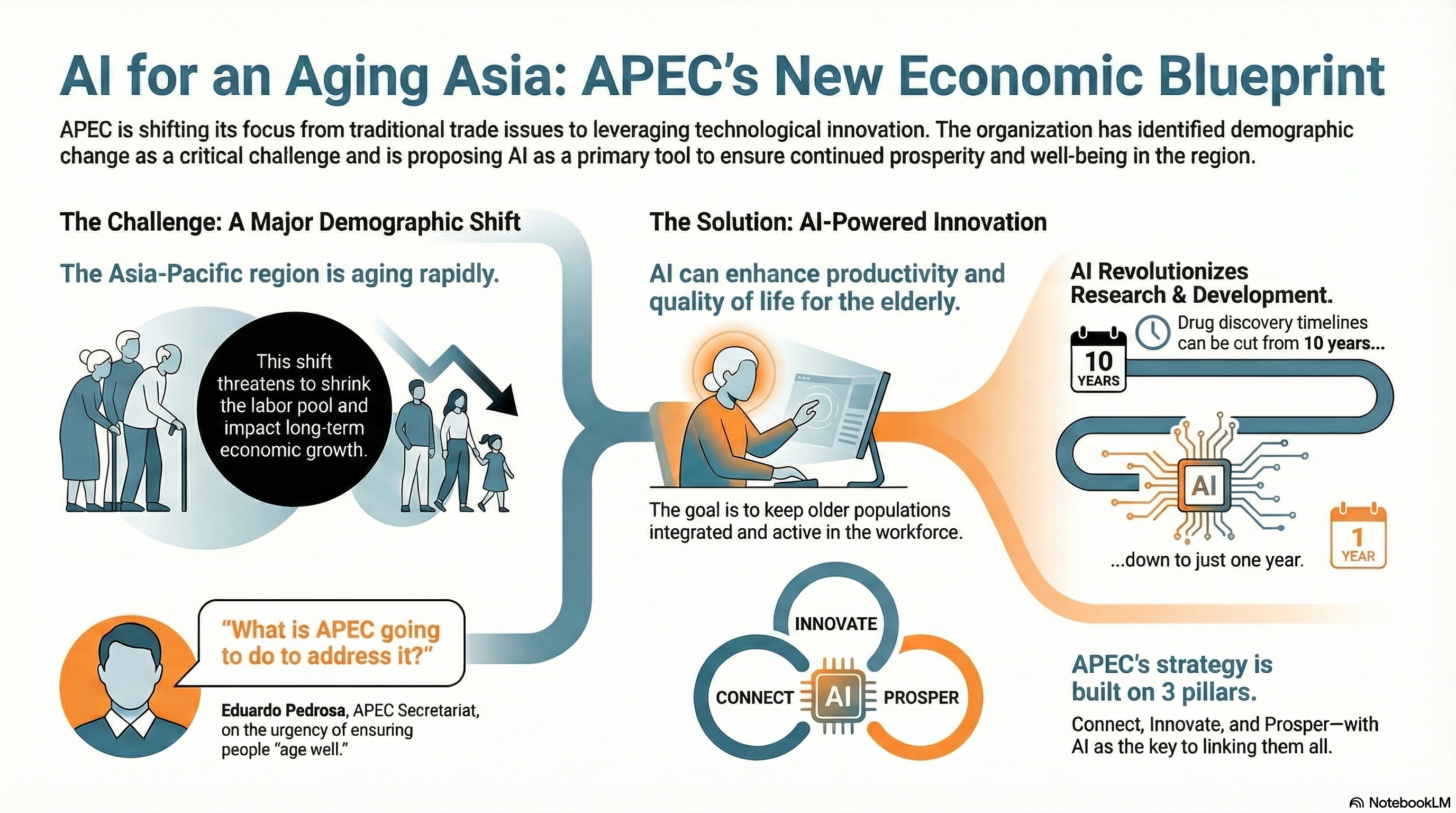
- The power of AI is highlighted for its ability to revolutionize research and development, such as reducing drug discovery timelines from a decade to a single year.
- The forthcoming APEC Economic Leaders’ Meeting aims for a successful outcome, with substantial work still required before the event.
- APEC’s agenda is focused on innovation and adapting Artificial Intelligence to address key societal problems, including healthcare.
- The organization is tackling the region’s demographic shift by developing strategies to support an aging population.
- AI is being proposed not only to enhance the productivity of the elderly but also to improve their quality of life.
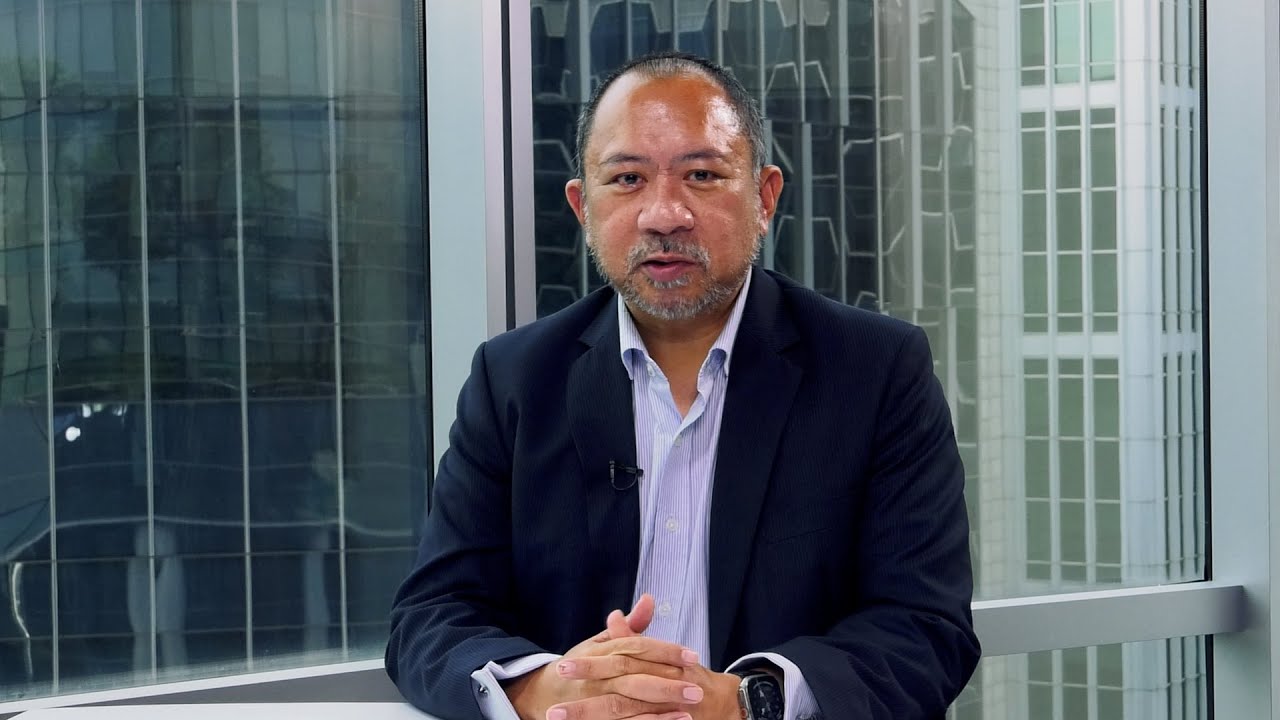
Eduardo Pedrosa, Executive Director of the APEC Secretariat, has signaled that the successful implementation of Artificial Intelligence (AI) solutions and addressing demographic change are the most pressing issues for the forthcoming APEC Economic Leaders’ Meeting. With only a month before the summit, Pedrosa emphasized the focus is on innovating and connecting people to adapt AI for societal challenges, moving beyond traditional trade issues.
The APEC agenda pivots on three pillars: connect, innovate, and prosper. The Executive Director highlighted the critical connection between AI application and the final pillar of prosperity, specifically addressing the region’s rapidly aging population.
“What we’re seeing in the Asia-Pacific region today is demographic change. People are getting older, so what is APEC going to do to address it?” Pedrosa asked, stressing that the organisation is concentrating on policies to ensure people “age well” and remain productive.
AI Revolutionizing Healthcare and Research
The organisation views AI as a fundamental tool to manage these demographic and structural shifts. Pedrosa pointed to healthcare as a primary sector for deployment, illustrating how AI transforms R&D and speeds up medical breakthroughs.
“AI is used not only in helping you have a more productive and comfortable life, but in R&D as well, in research and development,” he said. He provided a clear example of its efficiency: “So instead of taking 10 years to discover whether or not a medicine can be used, you can do that in one year because you have AI models to tell you whether this drug will actually work.”
The Executive Director stressed that connecting people and innovating—which includes formalizing a framework for AI use—are crucial steps to solving existing social problems and securing future prosperity for member economies. A major area of focus will be adapting AI applications to help the elderly population remain integrated and productive in the workforce, ensuring sustainable economic growth amid a shrinking labor pool. This proactive policy stance aims to reframe aging from an economic liability to an opportunity for innovation.
In securing the regional economic future, the current focus on leveraging new technology signals a definitive shift in the organization’s priorities. “Our work here is about connecting all of the people, innovating, dealing with artificial intelligence, and how do we adapt it so that it can be applied to all of the problems we have in society,” Eduardo Pedrosa told BackgroundBriefing.news. The outcome of the Leaders’ Meeting will set the tone for APEC digital economy collaboration in the years ahead.
More stories: Generative AI disrupts content marketing as experts urge shift to GEO strategies
About the speaker:
Eduardo Pedrosa
Executive Director of the APEC Secretariat
APEC
Eduardo Pedrosa, Executive Director of the APEC Secretariat, brings two decades of deep expertise in regional economic cooperation to his recent appointment, which was formally welcomed at the 35th APEC Ministerial Meeting in Lima, Peru, on November 14, 2024. Prior to taking the helm at APEC, Mr. Pedrosa served as the influential Secretary General of the Pacific Economic Cooperation Council (PECC), one of APEC’s three official observers. Recognized as a pivotal voice in Asia-Pacific affairs, his work has consistently centered on high-impact policy issues, notably trade, digitalization, and structural reform. His move underscores a continued commitment to fostering economic dialogue and stability across the vast Asia-Pacific region.
Mr. Pedrosa is a noted expert, having consulted for governments and businesses across the Asia-Pacific for more than 20 years on a diverse range of critical issues including finance and climate change. As a key figure, he coordinated PECC’s respected State of the Region report, offering an independent assessment of economic risks and priorities for APEC. A prolific thought leader, his published works include co-authoring Trade and Connectivity in the Post-COVID-19 World and editing several major publications on globalization, inequality, and regional economic community-building. Furthermore, he contributes his knowledge to the World Economic Forum as a member of the Global Risk Report’s Advisory Board, building upon his prior experience with the Konrad-Adenauer-Stiftung and the Philippine government.
FAQs:
What is the interviewee’s top priority right now?
Why is there such urgency in the lead-up to the APEC meeting?
What are the core themes being emphasized?
How does the interviewee envision AI helping society?
In what ways can AI improve healthcare?
What does “prosper” mean in this context?
What demographic shifts are shaping APEC’s priorities?
How should societies support “aging well”?
Beyond everyday use, how can AI accelerate research and development (R&D)?
Can AI really reduce drug discovery from ~10 years to ~1 year?
5W1H summary:
| Category | Summary |
|---|---|
| What |
1. APEC Economic Leaders’ Meeting 2. AI adaptation for society 3. Address demographic change |
| How |
1. Connect people and innovate 2. Apply AI to healthcare 3. Accelerate R&D timelines |
| Why |
1. Ensure successful APEC outcome 2. Support aging population 3. Drive Asia-Pacific prosperity |
| Who |
1. APEC member economies 2. Leaders and policymakers 3. Stakeholders in ASEAN region |
| Where |
1. Asia-Pacific region 2. Countries like Singapore, Malaysia 3. ASEAN economies |
| When |
1. One month before APEC 2. Ongoing preparations 3. Upcoming leaders’ meeting |
Transcript of the interview:
What’s really taking up my mind, my thoughts, and all of the time that I have is a successful outcome at the forthcoming APEC Economic Leaders’ Meeting. We have a lot to talk about in the meantime and there’s still, with one month to go, still a lot of work to do.
Our work here is about connecting all of the people, innovating, dealing with artificial intelligence, and how do we adapt it so that it can be applied to all of the problems we have in society. For example, how does AI help healthcare?
That speaks to the last one, which is prosper. What we’re seeing in the Asia-Pacific region today is demographic change.
People are getting older, so what is APEC going to do to address it? That includes ensuring that when you age, you age well; you’re productive.
AI is used not only in helping you have a more productive and comfortable life, but in R&D as well, in research and development. So instead of taking 10 years to discover whether or not a medicine can be used, you can do that in one year because you have AI models to tell you whether this drug will actually work.